
Understanding how much it costs to start a retail franchise is one of the first questions new investors ask when exploring business ownership. For professionals aged 34–50—employees planning a transition, investors diversifying income, or businesspeople seeking structured growth—retail franchising offers a proven model with predictable systems. However, retail franchise costs go beyond the advertised franchise fee and include setup, inventory, and operational expenses. This guide explains retail franchise startup costs in a simple, practical way so first-time investors can plan confidently.
What Is a Retail Franchise and Why Costs Vary
A retail franchise is a business model where an investor operates a physical store under an established brand, selling products directly to consumers. Examples include apparel, electronics, wellness products, specialty stores, and convenience formats.
Retail franchise costs vary widely because brands differ in size, positioning, store format, and inventory requirements. Location, store size, and target customer segment also play a major role in determining total investment.
Typical Cost Range to Start a Retail Franchise
Retail franchises are available across a wide investment spectrum, making them accessible to different types of investors. Entry-level brands focus on compact stores, while premium brands require larger formats and higher inventory.
For first-time investors, understanding these ranges helps shortlist brands that align with financial comfort and risk appetite.
- Low-cost retail franchises: ₹15–30 lakhs
- Mid-range retail franchises: ₹30–75 lakhs
- High-investment retail franchises: ₹75 lakhs–₹2 crores+

Key Startup Cost Components in a Retail Franchise
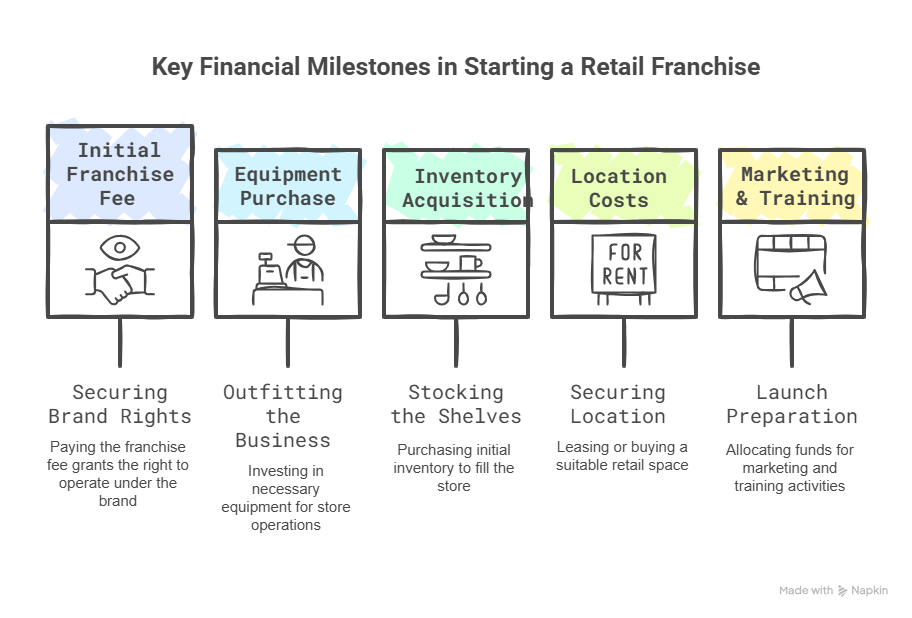
1. Franchise Fee
The franchise fee is the upfront amount paid to the brand for the right to operate under its name. This fee typically includes training, operational manuals, and initial onboarding support.
For first-time franchisees, the franchise fee provides access to a proven business model, reducing trial-and-error risks. However, it does not include store setup or inventory costs.
- One-time payment
- Covers brand rights and training
- Usually non-refundable
2. Store Location, Rent, and Deposit
Location is one of the most critical factors in retail success. High-visibility areas such as malls, high streets, and commercial hubs usually involve higher rentals but offer better footfall.
Investors should balance rental costs with sales potential rather than choosing the cheapest location available.
- Security deposit (typically 3–6 months’ rent)
- Monthly lease rental
- Mall maintenance or common area charges

3. Store Interiors and Fit-Out
Retail brands follow strict design and layout guidelines to maintain consistency across outlets. This ensures brand recognition but also adds to setup costs.
For beginners, standardized layouts simplify store planning and reduce design mistakes.
- Furniture and display units
- Lighting, signage, and branding
- Electrical and civil work
4. Inventory and Stock Purchase
Unlike food franchises, retail businesses require upfront investment in inventory. The quantity and type of stock depend on the product category and brand positioning.
Inventory planning directly impacts cash flow, making it one of the most important cost components.
- Initial stock purchase
- Replenishment buffer
- Storage and handling costs

5. Licenses, Technology, and Pre-Opening Costs
Retail franchises also require regulatory approvals and technology systems to operate smoothly. These costs are often overlooked by first-time investors.
Proper budgeting here avoids launch delays and operational disruptions.
- Trade licenses and registrations
- POS and billing systems
- Pre-opening marketing and hiring
Ongoing Costs After Launch
Starting the franchise is only the beginning. Retail franchise owners must also account for recurring monthly expenses that affect profitability.
Understanding these costs early helps investors calculate realistic margins and ROI.
- Royalty fees (percentage of sales or fixed fee)
- Staff salaries
- Utilities and store maintenance
Hidden Costs First-Time Retail Franchise Investors Miss
Many beginners focus only on visible expenses and ignore indirect costs. These hidden expenses often surface within the first year of operation.
Awareness at the planning stage prevents financial strain later.
- Inventory shrinkage or slow-moving stock
- Local marketing expenses
- Seasonal sales fluctuations
Is a Retail Franchise a Good Option for First-Time Investors?
Retail franchises can be an excellent option for first-time investors who prefer structured systems and physical customer interaction. They are particularly suitable for individuals comfortable managing staff and inventory.
However, retail also demands active involvement, especially in the early months. Investors seeking passive income may need strong store managers or partner support.